Showing posts with label pastoring. Show all posts
Tuesday, December 3, 2013
Pastors, We Are Not Martyrs
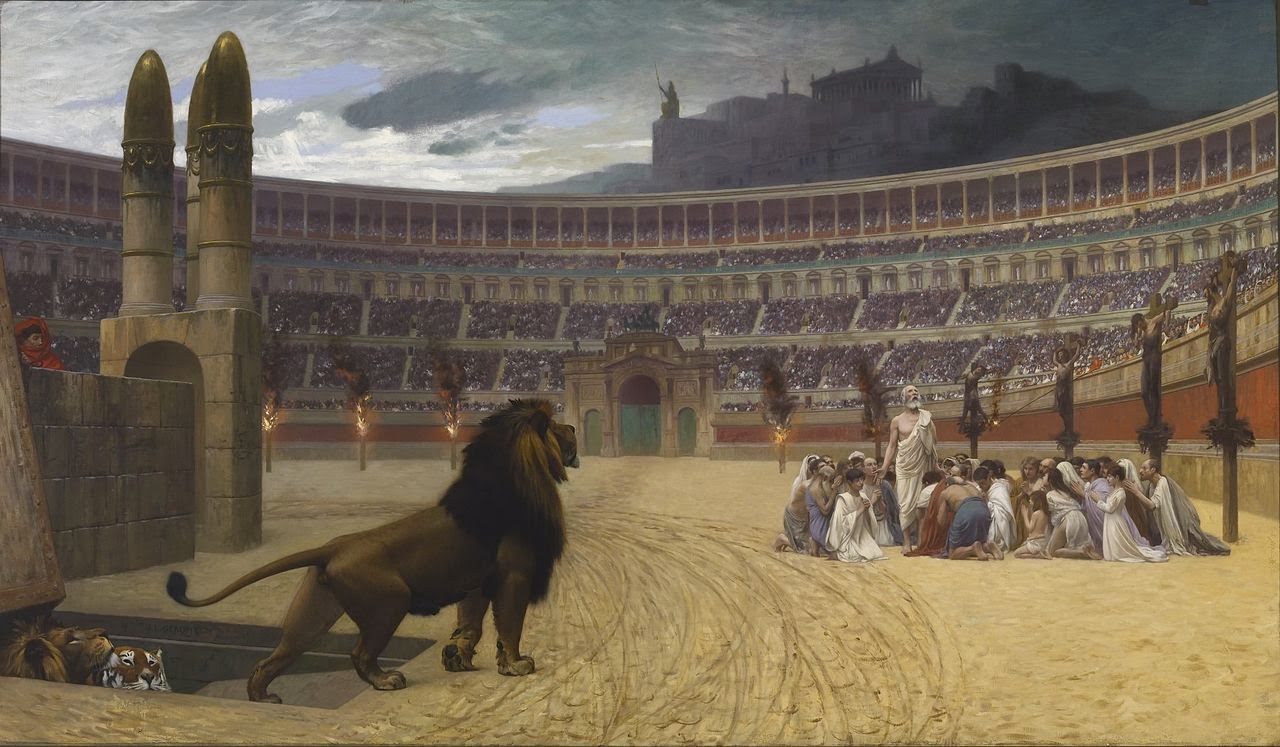
I know after reading the title of this post, many are popping their fingers, ready to fire off a correction to my post. But first, give me a chance to explain myself. The title is not implying we could not or should not be martyrs for the faith. If placed in that position, to renounce Jesus or die, I believe pastors and all believers should affirm with Luther, "Here I stand, I can do no other, so help me God." I am emphasizing something entirely different, namely, that the difficulties we face as pastors do not equal martyrdom. We should stop acting like martyrs. This is particularly true for those of us in the United States.
Fake Martyrs
I see a growing trend with pastors and ministry leaders who want to portray being in ministry as if it were a daily burden. We often go from one over-exaggerated crisis to the next. Yes, being a pastor is incredibly difficult, I do not belittle that. I have been a senior pastor for nearly eight years. I get it. I know what it feels like to have a burden for the lost, who think you are foolish. And I know what it feels like to have a burden for the church, who can often assume your incompetent. I have been called names in the community by unbelievers because of my beliefs. I have also been publicly talked about by other pastors in the community because they do not like our church's music style or clothing attire. Regardless of who you are, this is never fun.
However, as much as these things can hurt and frustrate you, it is not martyrdom. Friends, we are not to desire or seek the pity of others for the difficulties we face. And we should definitely now wallow in self-pity.
Real Martyrs
There are believers and pastors today, around the world, who are truly being persecuted and martyred for their faith. When you look at the plight of believers in places like Egypt, Iran, Turkey, Sudan, North Africa, and parts of Asia, you actually find individuals are dying for their allegiance to Jesus. Seventy-Five Christians were killed a few months ago in a church in Pakistan after two suicide bombers blew the place up. It is reported that nearly eighty people were executed in North Korea in the last few weeks, supposedly for being found owning Bibles.
Friends, these stories could fill pages and pages. Christians are truly experiencing persecution around the world. Yes, there is some opposition to our beliefs in the United States. Yes, we are becoming a minority on particular cultural hot-topic issues. But brothers, we are not martyrs.
There are believers and pastors around the world dying for the name of Jesus, not simply being called bad names because of Jesus. We need to keep that in perspective as we talk with others, interact on Twitter/Facebook, write our blog posts, and preach our sermons. Your ability to complain without fear is evidence you are not as persecuted as you think.
I'd love to hear your thoughts...why do you think so many in ministry today want to portray their life as so incredibly difficult?
Like and Share the post with others by using the buttons below
Wednesday, August 7, 2013
Pastoral Traps -- Building Personal Kingdoms
There are many traps that lie waiting for pastors. Over the next few weeks I'm going to write about those traps. One of the reasons I feel compelled to write about them is because, as a pastor, I have noticed my struggle with them. In talking with other pastors, I have come to realize that these traps are not isolated to me, but something many others deal with as well.
The trap this post will highlight is Building Personal Kingdoms.
In Matthew 4 the Spirit of God leads Jesus into the wilderness to be tempted by the devil. Jesus fasted in the wilderness for forty days and forty nights. He is then approached by Satan at the end of the fast and endures a series a temptations. Jesus is weakened physically, but battling Satan with Scripture, he is able to withstand the attack.
However, the third temptation Jesus experienced stood out to me specifically as a pastor. Jesus is taken to a high mountain and showed all the kingdoms of the world and their glory (4:8). Satan then tells Jesus, "All these I will give you, if you will fall down and worship me." (4:9). The temptation Jesus is presented with is not worshipping Satan, it is having all these kingdoms and the glory that is associated with them. Worshipping Satan is the vehicle to getting the actual offer being made.
As I contemplated this, I realized that this temptation lies at the feet of every pastor. If we are not careful, we will subtly slip into building and working for our own kingdoms. If not guarded, we will stand on the mountain peak daydreaming of those kingdoms of greatness that we are pursuing, and the glory that come with them.
This trap is hard to see because the actions you are doing may not look differently than the person focused on serving God alone. The actions look the same, but the motivation and goal become different. So pastoring can be for personal glory. Writing can be for personal glory. Preaching and teaching can become about personal glory. The kingdom built can become the kingdom of self, and the glory sought can become the glory of a famous name.
Not every pastor is guilty of this; however, every pastor should be on guard for it. Building personal kingdoms is a trap that lies waiting for every pastor.
Jesus' response to Satan shows us the nature of the offer that was made. Jesus says, "You shall worship the Lord your God and him only shall you serve." (4:10). This is vital to see. Jesus counters Satan's offer by telling him that God alone is to be worshipped, not Satan, and not the glory of personal kingdoms. It is the Lord our God that we shall serve, not ourselves.
Here would be three recommendations I would make for pastors to do:
1. Continually evaluate and prayerfully examine the motives behind the actions you are doing.
I think it is good for a pastor to regularly ask, "Why am I doing this?" When you ask that question, avoid giving yourself the cheesy church answer. Examine your heart. Search your motives. And move aggressively when you notice seeds of personal kingdom building present.
2. Remember that there is more joy and satisfaction in serving God and His kingdom than all the glory of serving your own.
If we want true joy and satisfaction, it will never be found in making much of ourselves. True happiness and is found in making much of God and living for His glory.
3. Invite some other local pastors or current pastoral friends into conversation about this trap, and share honestly with one another the personal struggles in this area.
Other pastors struggle in this area. This trap is something any person can be vulnerable to. Grab some local guys together and be real with one another in this area. It will be both refreshing and helpful to all involved.
I hope this will be helpful. I would love to hear other recommendations you have for avoiding this pastoral trap. Contribute your thoughts in the comment section below.
Wednesday, July 24, 2013
10 Preaching Tips (Part II)
This is the second half of my two-part post on 10 Preaching Tips (part I here).
6. Recognize Preaching as Spiritual Warfare
This is a point that I did not grasp or understand when I started preaching. We often prepare our messages in a bubble. We think about how good our content is going to be; we think about how if people would only listen, understand, and apply it, their lives would be great. But there is one issue: we have an enemy. We have a real enemy. He labors against our efforts. Do not think Satan is inactive when we are preaching. Do not think Satan sits idly by while you prepare your sermons. Preaching is an act of spiritual warfare.
In Matthew 13, Jesus tells and explains the story of the sower. In the story Jesus highlights some seed that has been thrown on to the ground. The seed represents the Word of God. However, there are enemies to this seed taking root and growing and producing fruit. There are the trials and tribulations of this world that threaten to choke the life out of the seed. But Jesus mentions another enemy - the devil. The evil one comes and snatches the seed that has been planted (13:19). Satan wants to actively snatch seeds of the Word off the path as we are throwing them down. You are not simply exchanging ideas with people when you preach, you are engaged in a war. This battle we are in is not flesh and blood, it is spiritual in nature, and we have an enemy (Ephesians 6:12).
7. Avoid Adding Too Much Content
One of the temptations of every preacher is adding too much content. Too much information can be bad. We can leave our congregations and hearers confused, overwhelmed, or lost in a sea of content. This does not mean we should "theology-light" or shy away from digging deep; however, it means that we do not have to throw everything we know about a subject into one sermon. Take for example this post. I could list more than ten tips for preaching. There are countless things that could be said about preaching (some of you have probably thought of them as you have read this). But I kept the post to ten tips. I also broke the ten tips into two posts, instead of one big post with all ten tips listed. Do not overwhelm those who are listening to you preach or teach with so much content that all of it is lost.
8. Balance Your Exegesis & Application
This has been and will always be, a constant point of emphasis for me. When I started preaching, I was application heavy. I would read a passage, skim over the surface of it with my explanation, and then move to the "so what" factor. But the more I learned about the Bible and theology, I went the opposite direction. The more knowledge I acquired about theology, the less application I gave my hearers. This is a dangerous seesaw.
The healthiest approach to preaching is a balance of Scripture exegesis and interpretation, with pointed application for the hearers. Yes, we must dig into the text, and highlight crucial doctrinal issues that emerge, but we also must show people how this touches their lives. We cannot only talk about what the Bible says, we must show people how to incorporate it into their families, workplaces, thought-life, and the rest of their lives. Always check your sermons when you finish preparing them for healthy balance.
9. Marinate Your Sermon, Don't Microwave It
This tip comes with two applications attached. The first, we need to prepare messages with time in between preaching them, that we can digest what we plan to say. Preparing a message on the weekend you are to deliver it is not wise. You may get away with doing that a few times, but if this becomes a habitual pattern, it will reflect in your preaching. Everything is better marinated and cooked slowly. I would rather have a pork tenderloin that has been marinated in a crock-pot all day, than a microwave dinner cooked in one minute and thirty seconds. The meals your congregation needs to be fed and healthy, are the ones you have been marinating for more than a few days, not microwaved.
The second application of this tip: we need to marinate our messages in prayer. The is a neglected part of sermon preparation. We should be prayerful every step of the process. Sermon preparation should be filled with prayer. Thinking through application, working through the text, and preparing to deliver the message should all be bathed in prayer. As you are actually preaching, inward prayer groanings should be an accompaniment to your sermon. Marinate your sermon, don't microwave it.
10. Expect Some People To Dislike Your Message
Not everyone is going to be a fan of your messages. This is not easy for us to accept. One reason is that a sermon becomes like our child. We have nurtured, cared for, and labored over that message. We do not want anyone telling us our baby is ugly. However, we must understand the nature of our message causes many to turn away. The cross can be a stumbling block. The cross is foolish for some people. There are many professing believers who struggle with worldliness. Do not be surprised when you offend people with a call to repentance or holiness. People do not like having their sin pointed out, even when you are pleading with them to flee to the Savior.
George Whitefield is one of my heroes of the faith. I love reading his sermons, and about his life. Whitefield is widely considered as one of the most gifted and anointed preachers to ever live. He had incredible ministry success. However, this gifted and anointed man had detractors. There were actually times when he preached where people hit him with rocks, mud, and even human feces. If you have not experienced that in any of your sermons, then you face less resistance than Whitefield. As preachers, we need to develop thicker skin. We often develop hard hearts instead of thick skin. We do not appreciate people disliking or questioning our messages. Friends, we must prepare our messages and deliver them knowing not everyone will love them. This puts us in good company, because not everyone loved Jesus' sermons.
This concludes the tips. These 10 Preaching Tips are not exhaustive. There are many more helpful things that could be said about preaching. I hope my list can be profitable for you and your growth as a communicator of God's Word. May we never forget, that we are proclaimers of the excellencies of Jesus Christ (1 Peter 2:9). We have the greatest message in all the world. Let's work hard to sharpen our skills, and pray for God's power to rest upon us as we teach the Scriptures.
Monday, July 22, 2013
10 Preaching Tips (Part I)
I love preaching. There is nothing else in all the world I would rather do with my life than preach Christ crucified and resurrected. I consider myself a student of preaching. I am always seeking to learn and get better at this high calling. If you are reading this, you probably feel this way too. I also believe I have a stewardship to train and help other preachers. This is not because I am the expert on preaching, rather I feel a responsibility to share any knowledge I have acquired to help others.
At my church, The Journey Church, we take training preachers serious. We raise up preachers from within our congregation and give them opportunities to actually do it. We have preaching seminars where we train them and give them chances to practice. We also give these men chances on Sunday mornings and Wednesday night services. Our church is only seven and half years old, but we have raised up and trained 24 different men in our church to preach. In those seven and half years, we have only had one person from outside the church come and preach. We highly value training up men in this way.
I want to share 10 Preaching Tips that I have learned along the way, either from experience or from others. They are not in any particular order, nor are they exhaustive. I hope these tips can help you as you labor to proclaim the excellencies of Christ (1 Peter 2:9) in whatever setting he has you. This post is Part I, Part II is here.
1. Pose a Problem and Offer a Solution
Preaching is ultimately about offering a solution to a problem. Proclaiming the good news comes on the heels of sharing the bad news. For example, if your doctor came in the room and said, "Congratulations, I have the injection you need right here. You are going to be just fine." You would probably be caught off guard, a little confused, and questioning why you needed this injection. However, if the doctor would have come and shared with you that you have a serious illness, and if untreated it would lead to your death, then he told you he had the injection you needed, that would be good news.
It is vital when preparing sermons, whether we begin from a text or a topic, we need to answer the question: what problem does this raise in the lives of the people I will be preaching to? I need to show them that they have a very real and serious problem facing them, but praise be to God, my sermon, and (most importantly) the truths contained in it, hold the solutions for that problem. Introducing a problem that everyone faces on the front end of a sermon also serves to catch people's attention. It tells them why they need to be paying attention to what you are about to say. Peter's sermon in Acts 2 demonstrates this approach very well. The people were cut to the heart, asking, "what shall we do?" Peter then gives them the solution (Acts 2:37-38).
2. Anchor Yourself to a Text
Regardless of whether you are teaching through books of the Bible or doing topical series, it is crucial that every sermon be anchored to a text. I understand there may be sermons that bounce around to different passages of Scripture throughout its entirety, but that should not be the norm. A good sermon will be anchored to a text of Scripture.
Why? First, because if Scripture is not central in your preaching, you should reconsider your definition of preaching. We are proclaimers of the Word of God. Faith comes by hearing, and hearing from the word of Christ (Romans 10:17). Jesus prayed that the Father would "sanctify them in the truth, your word is truth. (John 17:17)." It is the God-breathed (2 Timothy 3:16) Scriptures that transform people's dead hearts and make them alive. We should stand on Scripture in our sermons. The second reason to do this, is that having a central text keeps you in between the guardrails while you preach. A text can keep you on track and keep you from getting into the ditch with rabbit-trails and wandering off-topic.
3. Resist the Temptation of Preaching for Approval
I have been preaching for almost ten years and I still have this temptation. It happens very subtly. You find it sometimes in your sermon preparation time. You will be working through ideas and writing your sermon or jotting down notes, and without realizing it, you are thinking about whether people are going to agree with you. "Will they like this?," or perhaps even more subtle, "Will they like me if I say this?," begins to creep into your mind. It can also happen as you are preaching. You start judging people's facial expressions and body language and start trying to appease them, rather than envisioning God's posture to your message.
I recently found out from some friends that a sermon I had preached had offended a few people and they were mad. Their accusation against me was off-base and showed they had not listened to what I actually said. However, I still found myself battling internally over not winning the approval of these people. I knew my message was honoring to God. I knew I could test everything I had spoken against Scripture, yet I was wrestling inside over people not agreeing with me. (Tip #10 will deal more with this)
We must keep in mind that the temptation to preach for approval is not just avoiding saying offensive things so that people will continue to like us. It is not only about preaching in a way that people don't get mad. We also fight the temptation of preaching so that people will think we are really something special. You are preaching for approval when you are subtly thinking, "how many people will tweet this quote?" or "how smart or profound do I sound when I make this statement?" Oh friends, the temptations to preach for approval lie in wait around every corner. May we resolve to preach with a heart to please God.
4. Keep the Cross & Resurrection of Christ in View
In our preaching seminar we teach the guys that if any good Jew, Mormon, Jehovah's Witness, or Muslim can say "Amen" to your sermon then you did not press the cross and resurrection of Christ to the forefront well enough. It does not matter what text or topic we are dealing with, we must do as Spurgeon said, "make a beeline to the cross." One of the greatest dangers we face in a sermon is to stand and make a lot of great points about life, truth, and any number of things, but never get to the good news of Christ.
We are not self-help counselors. We are heralds for the King. We have an announcement to make to the world from the King of Kings. That message: "Jesus Christ is Lord; he died in our place and rose from the grave. Salvation is in him alone. Repent and believe the good news." When doing sermon preparation, keep asking yourself the question, "Am I establishing the necessity of trusting the finished work of Jesus, through his death and resurrection?" If your sermon does not need to hit on those points, you need to throw away your sermon.
5. Preach with Heightened Affections
The preaching and teaching that inspires me the most is affection-driven preaching. When I can smell that a guy loves the Lord and loves proclaiming the gospel, I love his kind of preaching. We are preaching the most glorious truths in all the universe. How could we ever preach them in a dull manner? How in the world is it possible to preach truths so glorious and a message so good as the gospel in a boring way? A guy can stand up all day long and talk about true things, but if his demeanor does not match the realities of what he is proclaiming, I don't believe him. Either the truths he is proclaiming are not as glorious as he says or he does not believe the glorious truths that he proclaims. I hope you get the gist of my point. Yes, tell me what is right and true and what I should believe, but show me how much you love these things! Show me these things are eternally important. Let me feel the gravity of these truths in your voice, body language, and affections.
I certainly do not suggest that anyone should fake affections. So this leaves us with a constant challenge. We need to be spending time with the Lord. We need to prepare our hearts just as thoroughly as we prepare our content. We need to work our affections up to a fervent pitch before stepping into the pulpit. These truths matter too much to be read like a menu at a restaurant. Exhort them as if you truly believe them and their implications.
Which of these tips are most helpful to you? I'd love to hear your feedback.
Part II of this post contains tips 6-10
At my church, The Journey Church, we take training preachers serious. We raise up preachers from within our congregation and give them opportunities to actually do it. We have preaching seminars where we train them and give them chances to practice. We also give these men chances on Sunday mornings and Wednesday night services. Our church is only seven and half years old, but we have raised up and trained 24 different men in our church to preach. In those seven and half years, we have only had one person from outside the church come and preach. We highly value training up men in this way.
I want to share 10 Preaching Tips that I have learned along the way, either from experience or from others. They are not in any particular order, nor are they exhaustive. I hope these tips can help you as you labor to proclaim the excellencies of Christ (1 Peter 2:9) in whatever setting he has you. This post is Part I, Part II is here.
1. Pose a Problem and Offer a Solution
Preaching is ultimately about offering a solution to a problem. Proclaiming the good news comes on the heels of sharing the bad news. For example, if your doctor came in the room and said, "Congratulations, I have the injection you need right here. You are going to be just fine." You would probably be caught off guard, a little confused, and questioning why you needed this injection. However, if the doctor would have come and shared with you that you have a serious illness, and if untreated it would lead to your death, then he told you he had the injection you needed, that would be good news.
It is vital when preparing sermons, whether we begin from a text or a topic, we need to answer the question: what problem does this raise in the lives of the people I will be preaching to? I need to show them that they have a very real and serious problem facing them, but praise be to God, my sermon, and (most importantly) the truths contained in it, hold the solutions for that problem. Introducing a problem that everyone faces on the front end of a sermon also serves to catch people's attention. It tells them why they need to be paying attention to what you are about to say. Peter's sermon in Acts 2 demonstrates this approach very well. The people were cut to the heart, asking, "what shall we do?" Peter then gives them the solution (Acts 2:37-38).
2. Anchor Yourself to a Text
Regardless of whether you are teaching through books of the Bible or doing topical series, it is crucial that every sermon be anchored to a text. I understand there may be sermons that bounce around to different passages of Scripture throughout its entirety, but that should not be the norm. A good sermon will be anchored to a text of Scripture.
Why? First, because if Scripture is not central in your preaching, you should reconsider your definition of preaching. We are proclaimers of the Word of God. Faith comes by hearing, and hearing from the word of Christ (Romans 10:17). Jesus prayed that the Father would "sanctify them in the truth, your word is truth. (John 17:17)." It is the God-breathed (2 Timothy 3:16) Scriptures that transform people's dead hearts and make them alive. We should stand on Scripture in our sermons. The second reason to do this, is that having a central text keeps you in between the guardrails while you preach. A text can keep you on track and keep you from getting into the ditch with rabbit-trails and wandering off-topic.
3. Resist the Temptation of Preaching for Approval
I have been preaching for almost ten years and I still have this temptation. It happens very subtly. You find it sometimes in your sermon preparation time. You will be working through ideas and writing your sermon or jotting down notes, and without realizing it, you are thinking about whether people are going to agree with you. "Will they like this?," or perhaps even more subtle, "Will they like me if I say this?," begins to creep into your mind. It can also happen as you are preaching. You start judging people's facial expressions and body language and start trying to appease them, rather than envisioning God's posture to your message.
I recently found out from some friends that a sermon I had preached had offended a few people and they were mad. Their accusation against me was off-base and showed they had not listened to what I actually said. However, I still found myself battling internally over not winning the approval of these people. I knew my message was honoring to God. I knew I could test everything I had spoken against Scripture, yet I was wrestling inside over people not agreeing with me. (Tip #10 will deal more with this)
We must keep in mind that the temptation to preach for approval is not just avoiding saying offensive things so that people will continue to like us. It is not only about preaching in a way that people don't get mad. We also fight the temptation of preaching so that people will think we are really something special. You are preaching for approval when you are subtly thinking, "how many people will tweet this quote?" or "how smart or profound do I sound when I make this statement?" Oh friends, the temptations to preach for approval lie in wait around every corner. May we resolve to preach with a heart to please God.
4. Keep the Cross & Resurrection of Christ in View
In our preaching seminar we teach the guys that if any good Jew, Mormon, Jehovah's Witness, or Muslim can say "Amen" to your sermon then you did not press the cross and resurrection of Christ to the forefront well enough. It does not matter what text or topic we are dealing with, we must do as Spurgeon said, "make a beeline to the cross." One of the greatest dangers we face in a sermon is to stand and make a lot of great points about life, truth, and any number of things, but never get to the good news of Christ.
We are not self-help counselors. We are heralds for the King. We have an announcement to make to the world from the King of Kings. That message: "Jesus Christ is Lord; he died in our place and rose from the grave. Salvation is in him alone. Repent and believe the good news." When doing sermon preparation, keep asking yourself the question, "Am I establishing the necessity of trusting the finished work of Jesus, through his death and resurrection?" If your sermon does not need to hit on those points, you need to throw away your sermon.
5. Preach with Heightened Affections
The preaching and teaching that inspires me the most is affection-driven preaching. When I can smell that a guy loves the Lord and loves proclaiming the gospel, I love his kind of preaching. We are preaching the most glorious truths in all the universe. How could we ever preach them in a dull manner? How in the world is it possible to preach truths so glorious and a message so good as the gospel in a boring way? A guy can stand up all day long and talk about true things, but if his demeanor does not match the realities of what he is proclaiming, I don't believe him. Either the truths he is proclaiming are not as glorious as he says or he does not believe the glorious truths that he proclaims. I hope you get the gist of my point. Yes, tell me what is right and true and what I should believe, but show me how much you love these things! Show me these things are eternally important. Let me feel the gravity of these truths in your voice, body language, and affections.
I certainly do not suggest that anyone should fake affections. So this leaves us with a constant challenge. We need to be spending time with the Lord. We need to prepare our hearts just as thoroughly as we prepare our content. We need to work our affections up to a fervent pitch before stepping into the pulpit. These truths matter too much to be read like a menu at a restaurant. Exhort them as if you truly believe them and their implications.
Which of these tips are most helpful to you? I'd love to hear your feedback.
Part II of this post contains tips 6-10
Monday, August 15, 2011
My Growing Skepticism of the Modern-Day Role of the Pastor
Yesterday at church was a great day. We dedicated over 16 children. We baptized 6 people (almost 80 for the year) who were making public professions of faith in Christ. We had one service and the building was jammed packed! It was an incredible day.
However, my day continued on into the afternoon. I had three meetings that afternoon with people from the church. One meeting was with a new couple who attends the church and the Lord is working on their hearts in phenomenal ways. They are wanting to honor the Lord with their relationship and were asking for accountability. The second meeting was with a man in his fifties who for the first time in his life, the gospel is making sense to him. He wanted to know how to draw closer to the Lord and truly give his life to Christ. We talked about seeking the Lord fervently and with desperation. The third meeting I had was with a lady who had tremendous trials and tribulations in her life over the last few years. She was inquiring as to how she could walk through those things in faith and know that the Lord is with her. We had such a good time of searching the truths of Scriptures and seeing how God can turn trials into blessings. I left these three meetings feeling truly used by God to help people apply the gospel to their lives.
Why do I mention these meetings? What is the point I am aiming for in this post? The answer is this: I see the meetings that I had in the afternoon equally as important as the services that happened in the morning.
In the world of pastoral leadership and church discussions, one of the major questions asked and raised is whether the pastor can be hands on with the congregation he leads and the church still grow. In others words, can a church keep growing and reaching people if the pastor is still assessable to the congregants? Most involved in this conversation say "no." Most do not think that a pastor can remain involved in the meetings about salvation, premarital counseling, and other type meetings and the church still grow to reach a lot of people. I am not saying that this is a false assertion, but I do have my doubts and points of skepticism. Where does my skepticism come from?
One of the things I enjoy doing is reading. I read a lot of books. Most of the books I read are theology books and things concerning the Christian life. My favorite books are the one's that have been written by dead people. I love old books, particularly the Puritans, and those who are Puritan-influenced. One of the things that I have noticed when I read these old pastors is that they frequently visited with and met with their congregants. They met with them over all sorts of issues. They met with them despite how big their congregation was. Richard Baxter visited every one of his thousand plus congregants in a year's time. Ichabod Spencer had Sunday night inquiry meetings where people would flood his home and he would meet with and answer questions for hours. In addition to Sunday night inquiry meetings, he made weekly house calls to congregants and those seeking the way of salvation.
When I read things like, this and then I think about what popular wisdom and opinion in our church culture today has become, I question whether they were ignorant of the ways to really grow their church or whether we are ignorant of what it means to be pastors.
I desire to be available to the congregation I lead. I know that it cannot be completely dependent upon me and that there will be limitations to my availability to every person. However, I wrestle over the popular opinion that pastors have to limit their involvement with only a select few in order for the church to grow. I cannot escape the thought that as a pastor, I am called to walk with anxious souls concerning the way of salvation, and that goes beyond preaching to them on Sunday mornings.
These are just some things on my heart and mind right now. What are your thoughts on this? What do you make of the popular opinion today of the role of pastors? Do you believe the Puritan-model is more biblical? Do you believe there is a middle ground?
Subscribe to this blog by using the links to the right. Share this post with others you believe it could help by using the buttons below.
Wednesday, August 3, 2011
I Love Pastoring
I had such an incredible experience this summer preaching to over 3000+ students and adults leaders. I have preached sermons which the Lord has used to bring conviction, salvation, restoration in relationships, and other types of visible fruit. These experiences have been great, and the people I have met and worked beside have been fantastic. But at the end of the day, while preaching to these large groups of people, my heart finds more joy in pastoring and shepherding the congregation in which God has made me an overseer.
I do not say this to minimize the opportunities to preach to others, but I say it to express how blessed I am that God has given me such a love for the people I pastor. I want to see them discover the riches of Christ more and more each day. The difference between being a pastor and an itinerant, is that I get to continue to walk with those and shepherd those I preach to. I enjoy this part of it more than the hour (sometimes more LOL) I am standing and exhorting them from God's Word.
We need itinerants, so this is not a knock against them, but we need more men who love their congregations, not use their congregations as stepping stones to something greater. I never want to prostitute the congregation I shepherd so that I can have more "opportunities" or a bigger platform to speak to others. I want to walk with a group of people who know me, warts in all, and still love me, and still love for me to use my gifts and calling to lead them.
I am first and foremost a pastor. I love shepherding people. I love discipling new Christians. I love sitting down with families who's marriages are struggling and pointing them to Christ and to the gospel. I love marrying people and doing their premarital counseling. As our church has grown, I have not been able to do these things for every single person, but these things still matter to me. This summer, and the opportunities I have experienced, have served to make me grateful for the Lord's favor and opening of doors to preach the gospel, but it has also served to show me that the Lord has called me to be, above any other ministry role or opportunity, a pastor. I never want to abandon the local church and her ministry for some larger platform. Regardless of what doors the Lord does or does not open for a larger platform to teach others, my heart is always to be a shepherd of a local church, who are learning together what it means to live out the gospel together.
I thank God for this. I love you Journey Church.
To subscribe to this blog click on the links to the right. To share this post with others use the buttons below.
I do not say this to minimize the opportunities to preach to others, but I say it to express how blessed I am that God has given me such a love for the people I pastor. I want to see them discover the riches of Christ more and more each day. The difference between being a pastor and an itinerant, is that I get to continue to walk with those and shepherd those I preach to. I enjoy this part of it more than the hour (sometimes more LOL) I am standing and exhorting them from God's Word.
We need itinerants, so this is not a knock against them, but we need more men who love their congregations, not use their congregations as stepping stones to something greater. I never want to prostitute the congregation I shepherd so that I can have more "opportunities" or a bigger platform to speak to others. I want to walk with a group of people who know me, warts in all, and still love me, and still love for me to use my gifts and calling to lead them.
I am first and foremost a pastor. I love shepherding people. I love discipling new Christians. I love sitting down with families who's marriages are struggling and pointing them to Christ and to the gospel. I love marrying people and doing their premarital counseling. As our church has grown, I have not been able to do these things for every single person, but these things still matter to me. This summer, and the opportunities I have experienced, have served to make me grateful for the Lord's favor and opening of doors to preach the gospel, but it has also served to show me that the Lord has called me to be, above any other ministry role or opportunity, a pastor. I never want to abandon the local church and her ministry for some larger platform. Regardless of what doors the Lord does or does not open for a larger platform to teach others, my heart is always to be a shepherd of a local church, who are learning together what it means to live out the gospel together.
I thank God for this. I love you Journey Church.
To subscribe to this blog click on the links to the right. To share this post with others use the buttons below.
Subscribe to:
Posts (Atom)


